
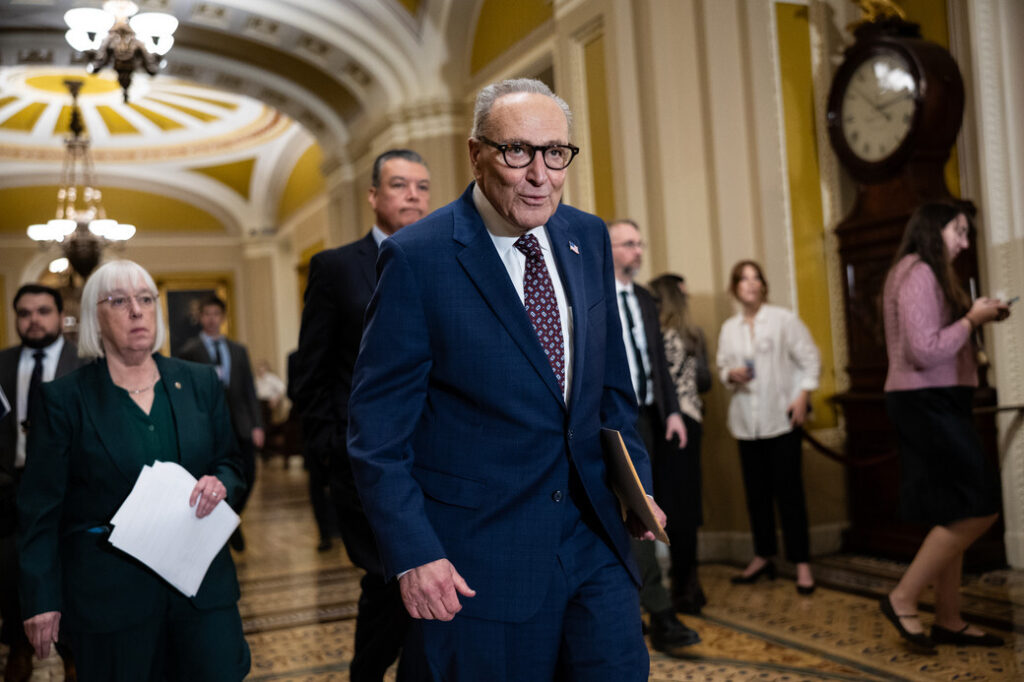
Senate Democrats halted consideration of key government funding bills on Tuesday, raising the possibility of a partial shutdown as negotiation deadlocks over Homeland Security funding continue. The impasse centers on the Department of Homeland Security’s budget, with Democrats opposing a funding measure they argue falls short of necessary provisions ahead of the impending September 30 deadline. Senate Majority Leader Chuck Schumer and Senate Minority Leader Mitch McConnell expressed frustration but maintained positions that have stalled legislative progress on several appropriations bills needed to keep government agencies operational.
The fiscal year for the federal government ends on September 30, and Congress must pass funding measures or a continuing resolution to avoid a shutdown. This year, disagreements over DHS funding and border security have complicated timely passage of the appropriations. Democrats contend that current proposals disregard emergency funding for disaster relief and border security programs, while Republicans emphasize fiscal discipline and reductions in discretionary spending. Historically, government shutdowns have occurred when political parties clash over budget priorities, with the last significant shutdown taking place in 2018–2019.
The House has already passed a series of appropriation bills, but the Senate has not followed suit due to Democratic objections to border-related spending levels included in GOP-sponsored legislation. At issue is a proposed $17.3 billion allocation for the Department of Homeland Security, which Democrats argue does not adequately fund needed immigration and natural disaster responses. Senate Democrats blocked the bills to compel negotiators to reach an agreement that aligns with their priorities. This move increases the stakes as the September 30 deadline draws nearer.
Congressional leaders have engaged in several rounds of discussions to resolve the deadlock. However, with limited days remaining before the fiscal year concludes, the risk of a partial government shutdown that would suspend non-essential federal activities has intensified. Such shutdowns can have wide-ranging implications, including furloughs for thousands of federal employees and disruptions to public services. Appropriations committees continue working to find middle ground, but substantive agreement has yet to be reported.
Senate Majority Leader Schumer acknowledged the impasse, stating the need to balance fiscal responsibility with immediate operational requirements of DHS and other agencies. Minority Leader McConnell urged the Democratic caucus to reconsider obstructionist tactics, emphasizing the serious consequences of a lapse in government funding. The Global Brief notes that if no legislative action occurs by the end of September, parts of the federal government could face partial closure. Lawmakers have signaled a willingness to continue negotiations under increased pressure as the funding deadline approaches.