
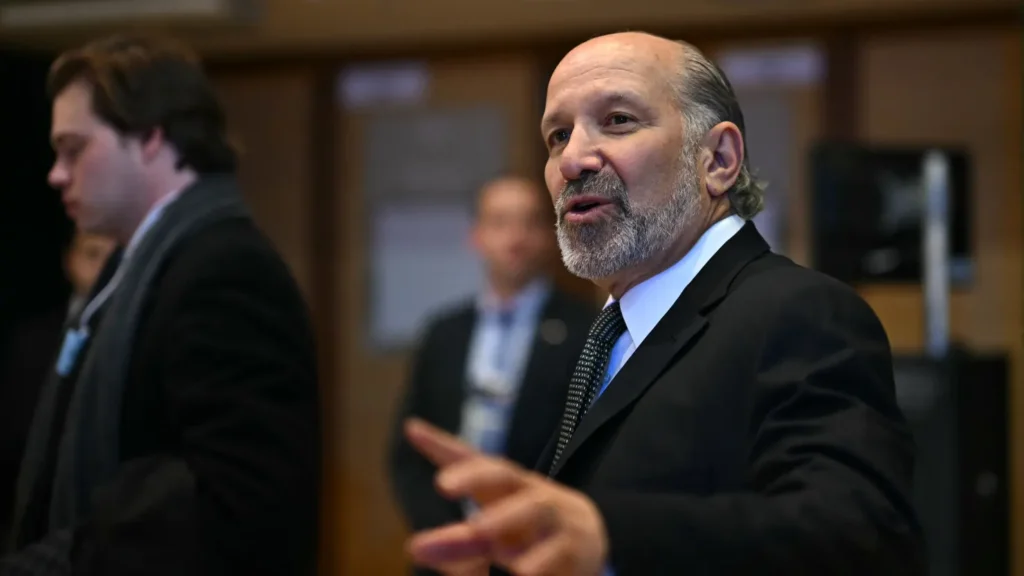
Bipartisan members of the United States Congress have formally called for Howard Lutnick, chairman and CEO of Cantor Fitzgerald, to resign following revelations concerning his misleading statements about past associations with Jeffrey Epstein. The demand emerged amid growing scrutiny over connections between prominent figures and Epstein, who was convicted of sex offenses before his death in 2019. Congressman Thomas Massie, alongside the top Democrat on the House Oversight Committee, Carolyn Maloney, publicly urged Lutnick’s immediate resignation on the grounds that trust has been compromised by his prior denials.
The controversy centers around Lutnick’s responses to questions about any involvement with Epstein’s network. Previously, Lutnick asserted that he had no substantive ties to Epstein, a claim now contradicted by newly surfaced evidence. This evidence includes communications and documented interactions suggesting a more intricate relationship than initially acknowledged. The issue intensifies concerns about transparency and accountability within corporate and financial sectors regarding individuals linked to Epstein.
Congresswoman Maloney, who co-chairs the House Committee on Oversight and Reform, has emphasized the importance of truthfulness from leaders in positions of public influence. She stated that deceptive behavior by such executives undermines public confidence in institutions and hinders legislative efforts aimed at uncovering and preventing abuse. The bipartisan nature of this demand highlights a rare consensus in Washington amid otherwise divided political alignments.
Howard Lutnick is a longstanding figure in New York’s financial community, leading Cantor Fitzgerald, a firm significantly affected by the September 11 attacks. His company is publicly traded and subject to regulatory oversight including securities laws that mandate truthful disclosures. Should these allegations about his misrepresentations be substantiated through investigations, Lutnick could face legal and reputational repercussions.
The House Oversight Committee has scheduled hearings to examine the extent of Lutnick’s connections with Epstein and evaluate the accuracy of his statements under oath or in public statements. These hearings are expected to delve into corporate governance standards, the ethical responsibilities of business leaders, and the mechanisms for corporate transparency. Lawmakers have indicated that failure to comply with committee requests or continued obfuscation could lead to further congressional actions.
The case against Lutnick forms part of a broader inquiry into the networks surrounding Jeffrey Epstein, whose criminal exploitation of minors implicated numerous high-profile individuals. Federal agencies and congressional committees have pursued comprehensive investigations since Epstein’s 2019 death, aiming to dismantle the structures that enabled his trafficking operations. Institutions and individuals linked through previously undisclosed relationships are now under intensified examination.
In response to the public pressure, Lutnick has neither confirmed nor denied the full extent of his prior relationship with Epstein but has expressed willingness to cooperate with investigative bodies. His legal representatives have issued statements affirming his commitment to transparency, though they dispute characterizations that he intentionally misled the public or congressional authorities. The unfolding developments contribute to a wider debate about accountability for corporate leaders amid politically sensitive criminal inquiries.
This incident underscores the critical role of congressional oversight in reinforcing ethical standards within the private sector, especially when allegations intersect with criminal misconduct of national concern. The ongoing investigations will determine whether Lutnick’s conduct violated any laws or regulatory obligations, and whether his resignation is warranted to maintain integrity in both the financial industry and public trust. The House Oversight Committee continues to monitor all relevant disclosures as part of its mandate to ensure government and corporate accountability.