
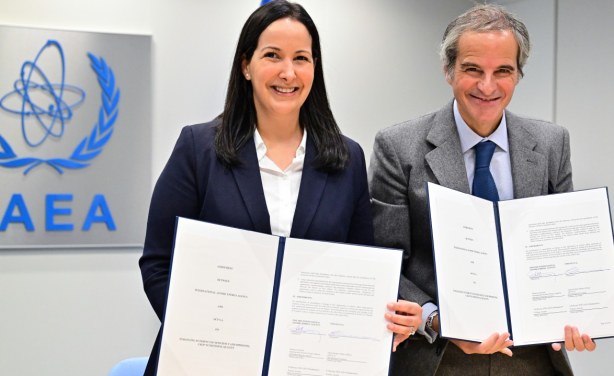
The International Atomic Energy Agency (IAEA) and the OCP Group have entered into a partnership aimed at advancing global food security through the enhancement of sustainable agricultural practices. The agreement focuses on the application of nuclear science and technology to optimize fertilizer use and improve soil health, directly addressing challenges related to food production and nutrient management in various regions worldwide. This collaboration was formalized during a signing ceremony that underscored the shared commitment of both organizations to support food systems resilient to climate change and population growth. The OCP Group, a leading global producer of phosphate-based fertilizers, will leverage its expertise alongside the IAEA’s capabilities in the peaceful application of nuclear techniques.
Their joint efforts will include research, capacity building, and technology transfer to enhance crop yields and minimize environmental impacts. The IAEA’s involvement is guided by its mandate under the United Nations to promote peaceful uses of nuclear science and its role in applying isotopic and nuclear methods to agricultural improvement. By integrating isotope techniques, the partnership aims to improve nutrient uptake efficiency by plants, thereby reducing excessive fertilizer application and related greenhouse gas emissions. As part of the collaboration, specialized laboratories will be engaged to analyze soil quality and fertilizer efficiency, providing vital data to inform agricultural policies and practices. Both the IAEA and OCP Group intend to disseminate their findings and technological advancements to farmers and agri-businesses globally, particularly targeting developing countries with significant food insecurity concerns.
This partnership follows the framework of several past initiatives where the IAEA supported agricultural innovation using nuclear technology, reaffirming its commitment to addressing global challenges through scientific cooperation. The agreement stipulates a multi-year programme with scheduled assessments to monitor progress and effectiveness, ensuring that project outcomes align with international food security goals under the United Nations Sustainable Development Agenda. Officials from both organizations emphasized the strategic importance of combining their respective capabilities to foster sustainable development while mitigating the environmental footprint of modern agriculture. While specific project locations and timelines were not disclosed in detail, the partnership represents a coordinated effort to enhance productivity and sustainability within global food systems in response to growing demand and environmental constraints.