
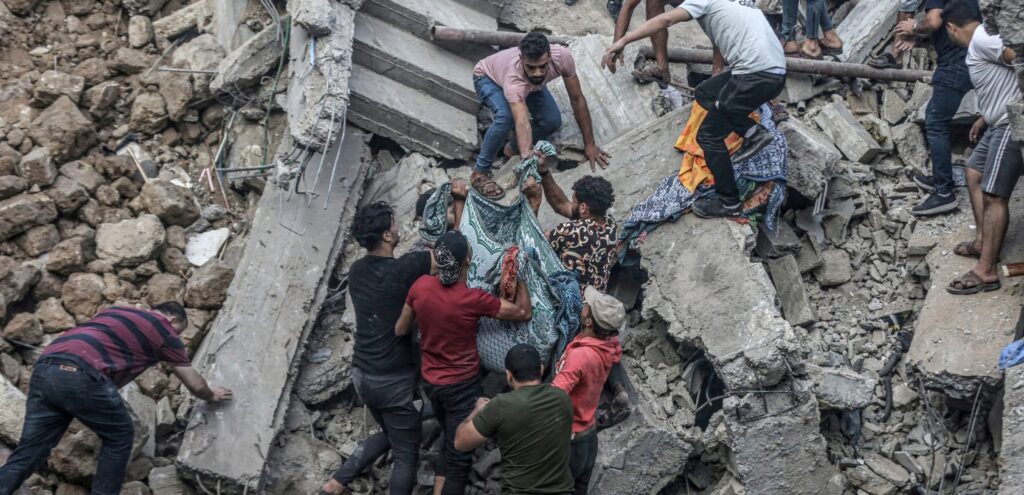
Recent casualty logs compiled by aid agencies and independent monitors show Israeli air and artillery strikes in Gaza are killing civilians at roughly four times the rate of fighters. Roughly eight in ten deaths recorded over the past several months have been non-combatants, underscoring how intensely the bombardment has fallen on ordinary residents despite repeated assurances that the campaign is aimed at militants and their infrastructure.
Approximate civilian-to-fighter death ratio recorded in recent strikes across Gaza.
≈80% of the fatalities logged since late autumn have been classified as civilians by local health authorities.
The Gaza Health Ministry, which tracks hospital admissions and morgue records, continues to report that women, children and older adults make up the majority of the casualties. That pattern complicates Israel’s argument that it is honoring the laws of armed conflict, which demand that militaries distinguish between civilian and military targets and ensure that incidental harm to bystanders is not disproportionate to any anticipated battlefield gain.
Israeli officials counter that every strike is designed to degrade the capabilities of Hamas and allied factions that operate from the enclave. Military spokespeople highlight attacks on tunnel networks, command hubs and weapons depots, and they point to phone calls, text alerts and leaflet drops as evidence that they are trying to empty buildings before the bombs land.
Even so, the United Nations, humanitarian agencies and several human-rights monitors have warned that the casualty balance raises red flags about proportionality and necessity. They have pressed for independent investigations into the deadliest incidents to determine whether Israeli forces complied with international rules meant to protect civilians once fighting starts.
Those concerns are magnified by Gaza’s density. More than two million people live in a sealed strip only 25 miles long, leaving little room to move when shells begin to fall. Satellite imagery and field reports point to flattened apartment blocks, cratered streets and repeated strikes on schools and clinics, conditions that have displaced tens of thousands and strained already-limited access to food, power and medical care.
Israel says Hamas bears responsibility for much of the danger because the group embeds launch sites, tunnel entrances and command posts inside residential areas. That tactic, Israeli commanders argue, forces them to pursue legitimate military targets surrounded by civilians. Independent verification of those claims is difficult, however, because few outside journalists or investigators can freely enter the bombarded neighborhoods.
The persistent disparity between civilian and militant deaths has therefore become a central diplomatic flash point.
Field monitors tracking casualty data
Allies and critics alike are urging Israel to recalibrate its campaign or accept stricter monitoring, while also pressing Hamas to halt attacks that provoke retaliation. How both sides respond will determine whether the conflict edges closer to a political resolution or remains locked in cycles that exact the highest price from Gaza’s civilians.