
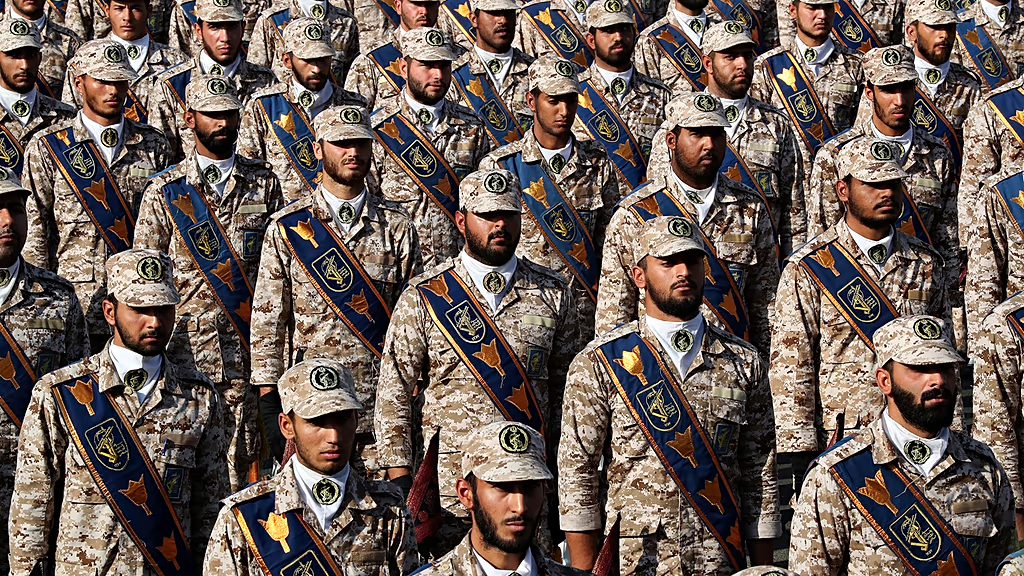
The European Union has officially designated Iran’s Islamic Revolutionary Guard Corps (IRGC) as a terrorist organisation, marking a significant escalation in its approach to Tehran’s military activities. This decision was formally adopted on Thursday following intensive negotiations among EU member states, making the IRGC subject to EU sanctions including asset freezes and travel bans. The move is intended to signal a unified stance against groups the EU accuses of destabilising actions in the Middle East.
The IRGC, established after the 1979 Iranian revolution, has long been a central component of Iran’s military and political influence, both domestically and abroad. It operates its own economic empire and commands several proxy militias across the region, including in Iraq, Syria, and Yemen. Prior to this, only specific branches of the IRGC had been targeted by sanctions, but this new designation covers the entirety of the organisation, effectively broadening the EU’s punitive measures.
The EU’s decision was shaped by reports linking the IRGC to terrorism-related activities, including support for armed groups involved in conflicts and assassination plots on European soil. Officials emphasized that sanctions will seek to hamper the IRGC’s financial networks and restrict its ability to operate internationally. This listing aligns with previous moves by the United States, which has labelled the IRGC a foreign terrorist organisation since 2019, and marks a rare consensus among European powers on how to address Iran’s security apparatus.
Economic and diplomatic ramifications of the decision are expected to be considerable, given the IRGC’s role in key sectors of Iran’s economy such as oil, construction, and telecommunications. The EU maintains that targeting the IRGC is essential to curbing the organisation’s reach and deterring Iran’s support for militant proxies. Analysts refer to this action as one of the toughest EU measures against Tehran in recent years, reflecting growing concerns over Iran’s regional policies and its nuclear ambitions.
Following the announcement, EU representatives reiterated the bloc’s readiness to enforce the sanctions rigorously while continuing dialogue on wider security and nuclear issues with Iran. The European Council confirmed that subsequent steps would focus on implementation checks and coordination with international partners. This development signals a deepening of the EU’s security policy and a heightened commitment to counterterrorism within its external relations framework.