
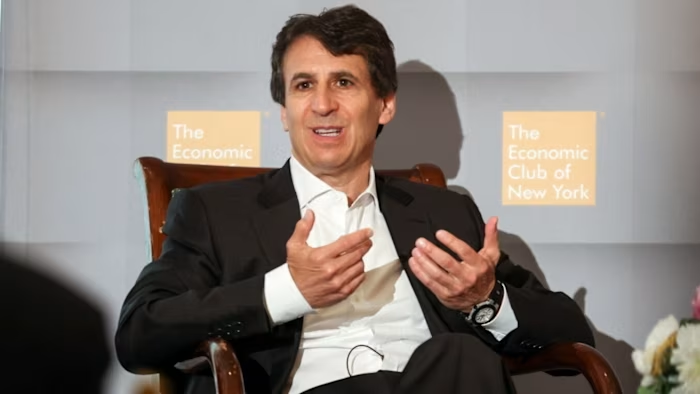
Marc Rowan, the chief executive of Apollo Global Management, engaged Jeffrey Epstein for consultation on tax-related issues concerning the investment firm, according to financial records and internal correspondence. The meetings and communications occurred several years prior to Rowan becoming CEO, highlighting Epstein’s unexpected role in matters affecting one of the world’s largest private equity firms. This revelation has attracted scrutiny due to Epstein’s criminal background and the potential implications for Apollo’s governance and ethical practices. Apollo, which manages assets exceeding hundreds of billions of dollars, has faced challenges in maintaining reputational integrity following ties to Epstein.
Jeffrey Epstein, who was convicted in 2008 for soliciting prostitution from a minor and later died in jail awaiting federal sex trafficking charges, had extensive networks with high-profile financial figures. Documents obtained by The Global Brief underscore that Rowan sought Epstein’s expertise on tax shelters and offshore strategies designed to minimize Apollo’s tax liabilities. These interactions spanned at least several months, during which Epstein reportedly provided input on how Apollo could optimize its tax structures globally.
Despite Epstein’s criminal history, Apollo did not disclose these consultations publicly at the time, and there was no indication they resulted in any illegal activity. However, the revelations have raised questions about diligence and oversight within major financial institutions when dealing with controversial advisors. Apollo has stated that any dealings with Epstein predated Rowan’s leadership and that the firm adheres to robust compliance measures. Additionally, regulators have intensified their focus on transparency in private equity operations, reinforcing the need for clear governance frameworks amidst complex tax arrangements.
The case sheds light on broader issues of accountability in the financial sector, where offshore tax planning remains a significant, though legal, practice influencing global capital flows. According to the Organisation for Economic Co-operation and Development, multinationals avoid an estimated $100 billion annually through tax strategies involving secretive jurisdictions. Apollo’s situation exemplifies the tension between aggressive tax planning and reputational risk, particularly post-Epstein’s conviction. The firm’s association with Epstein underscores the potential vulnerabilities within networks of elite finance professionals.
Apollo Global Management has pledged full cooperation with inquiries examining the extent and nature of Epstein’s advice. Internal reviews are ongoing to assess compliance with corporate governance rules. Rowan, who became CEO in 2021, has addressed the issue publicly, emphasizing that any interactions occurred before his tenure as head of the firm. The unfolding investigation is expected to clarify the factual circumstances and guide future regulatory scrutiny of private equity firms’ external advice sources.