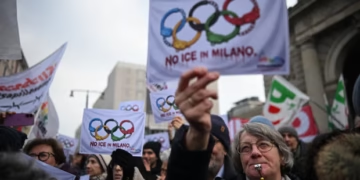





























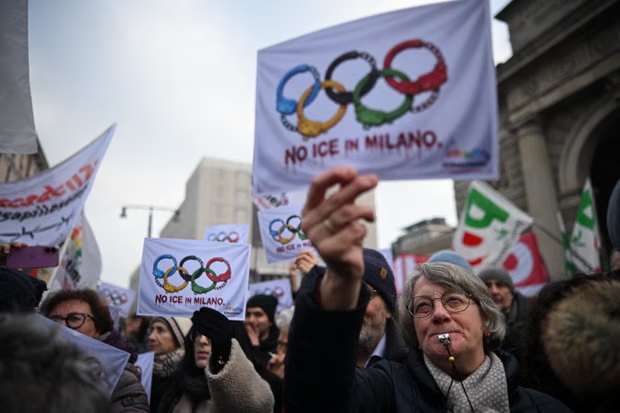
Mass demonstrations erupted in Milan as activists protested the planned deployment of U.S. Immigration and Customs Enforcement (ICE) agents during the upcoming Winter Olympics in Italy. The protests, held in late January 2024, focused on opposing ICE’s intended presence, which organizers argue contradicts the spirit of international sporting events and humanitarian principles. Demonstrators gathered near city landmarks, calling on authorities to reject the deployment and emphasize human rights protections amid the heightened security measures for the Games. The protests reflect broader tensions surrounding immigration enforcement policies and their intersection with global events. The Italian government, hosting the Olympics from February 6 to 22, had coordinated with U.S. officials to address security concerns, including assistance from ICE agents for immigration-related issues at the event. This planned partnership aligns with security protocols to manage the influx of visitors and to prevent illegal activities during the Games.
Italy has seen rising debates over immigration enforcement, particularly regarding foreign cooperation and the role of agencies like ICE on European soil. The deployment plan faced criticism from human rights advocates who cite ICE’s controversial record, including past allegations of rights violations and aggressive enforcement tactics. In Milan, protesters emphasized that the Olympics should promote inclusion rather than enforcement policies perceived as discriminatory. The Italian Interior Ministry confirmed its collaboration with international partners but maintained that all operations would adhere to Italian law and international standards. The ministry also highlighted that the size and scope of ICE’s involvement would be limited and focused solely on legal immigration support.
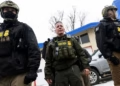
The planned deployment involves a contingent of ICE agents tasked with assisting Italian border and customs officials, primarily to streamline processes and enhance security screening. Officials stated that this cooperative approach aims to ensure the safety of athletes and spectators by mitigating risks associated with undocumented crossings or trafficking. The agreement was formalized in late 2023, incorporating strict operational guidelines reviewed by both Italian and American authorities. ICE’s director at the time underscored the agency’s commitment to respecting Italian sovereignty and collaborative law enforcement efforts. The agency also clarified that no new enforcement powers would be granted beyond its advisory and support role for the duration of the Olympics.
Security arrangements for the Winter Games involve multiple agencies, with Italy investing significantly in public safety infrastructure and personnel deployment. The Italian government announced a budget exceeding €300 million dedicated to security enhancements, including surveillance, rapid response teams, and international cooperation. The U.S. role is just one piece within this extensive network intended to safeguard the event amid broader geopolitical challenges. Organizers stressed that the Olympic Charter’s principles guide all operational decisions, specifically emphasizing non-discrimination and respect for participants’ rights. These tensions arise amid increasing scrutiny of immigration policies globally, where sporting events often become focal points for political expression and advocacy.
Authorities plan to monitor ongoing protests to prevent disruptions during the Games while balancing freedom of assembly rights. The Milan municipal government issued statements urging calm and constructive dialogue, emphasizing respect for law and order. The initial days of the Winter Olympics are expected to see heightened security presence alongside continued protests. Official responses indicate no changes to the deployment plan as of late January 2024, with final operational details to be confirmed in coordination meetings scheduled in early February. Both Italian and U.S. officials reaffirmed their commitment to a transparent process and to upholding the safety and dignity of all individuals involved in the Games.