
































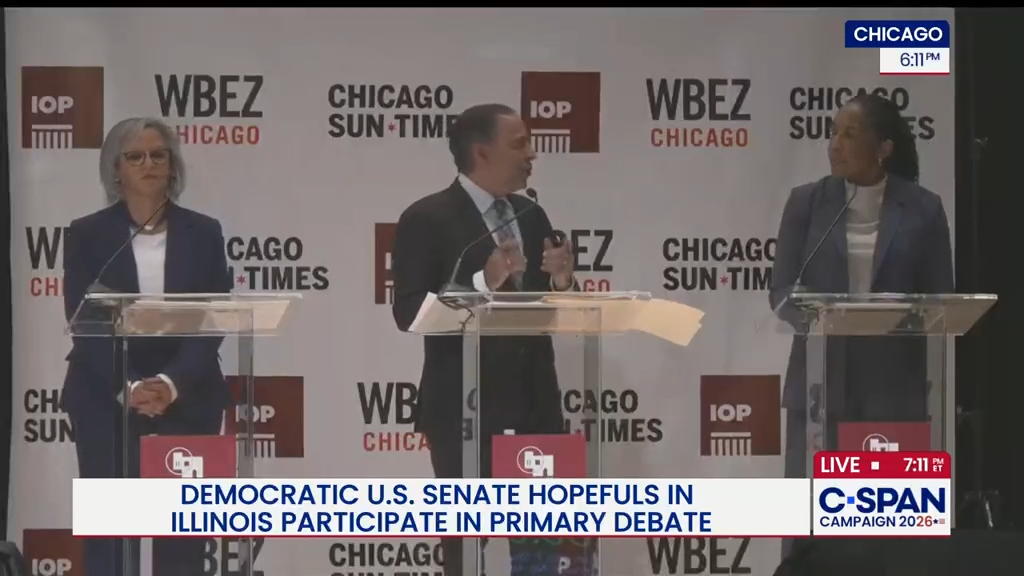
Illinois Lieutenant Governor Juliana Stratton has publicly stated that she will not support Senate Majority Leader Chuck Schumer in his effort to remain in his leadership position. The announcement, which was made during a recent political event, signifies a notable dissent within the Democratic Party ranks as Schumer seeks to maintain his influence in the Senate. Stratton’s decision reflects growing tensions among progressive Democrats over the direction of party leadership and policy priorities. Her stance aligns with a broader movement that questions the current leadership’s approach to legislative negotiations and party dynamics. Chuck Schumer has served as Senate Majority Leader since 2021, playing a key role in advancing the Democratic agenda, especially in areas such as infrastructure, healthcare, and climate policy. However, the 2024 election cycle has intensified scrutiny on Senate leadership as members weigh the party’s future strategies amidst a potentially divided Senate. Illinois, as a significant battleground state with a large delegation in Congress, has often shaped influential political discussions, and Stratton’s remarks underscore the evolving power plays within the party at both state and national levels.
The role of Senate Majority Leader includes managing floor activities, setting legislative priorities, and representing the Senate in negotiations with the executive branch. Schumer’s leadership has been marked by efforts to unite a diverse caucus, but critiques from figures like Stratton question whether this approach adequately reflects the growing progressive wing’s demands. The leadership race comes as the Senate prepares for critical votes on budget reforms and social policy, which require cohesive party strategy to pass. The explicit refusal of a high-profile state official like Stratton to endorse Schumer highlights the challenges he faces in solidifying unanimous support across Democrats. Institutionally, disagreements over leadership choices may influence committee assignments and legislative scheduling, potentially slowing down the passage of key bills. The Democratic caucus must balance internal ideological differences with practical governance to maintain control of the Senate, particularly with midterm elections looming. Schumer’s position, while traditionally strong, may be weakened if more members follow Stratton’s lead, introducing uncertainty into the party’s capacity to navigate contentious political issues. Analysts from The Global Brief note that such public dissent affects the perception of party unity ahead of critical campaign cycles.
Looking ahead, negotiations within the Senate Democratic Conference are expected to intensify as members deliberate over leadership roles and policy platforms. Stratton’s opposition to Schumer is likely to encourage other dissenting voices to express their concerns more openly, which could lead to compromises or the emergence of alternative candidates for leadership. The coming weeks will be pivotal in determining how the Democratic Party manages internal divisions and positions itself for the 2024 elections. Observers emphasize that while the decision of one state official may seem limited, it reflects wider debates about party identity and legislative priorities at a crucial juncture.