































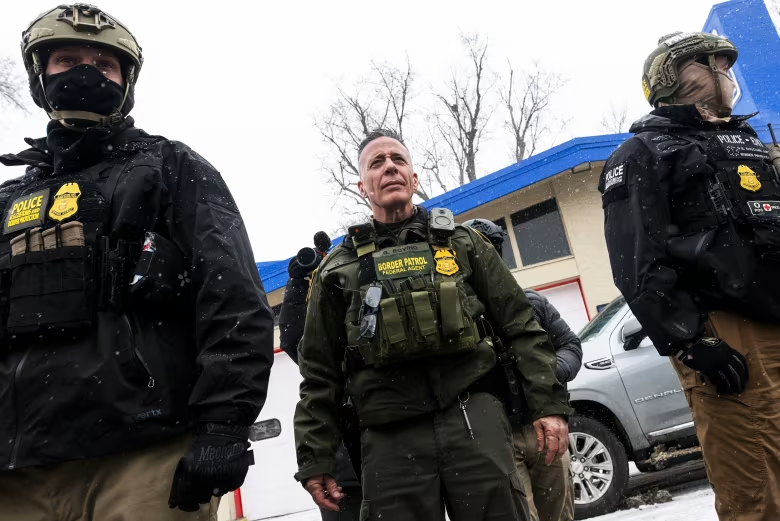
Gregory Bovino the 55-year-old border patrol commander who has become the public face of the Trump administration’s immigration crackdown in Minneapolis is expected to leave the city this week amid a significant reshuffling of federal immigration enforcement operations Following two fatal shootings involving federal agents the administration is scaling back its presence and changing leadership of the Operation Metro Surge in Minneapolis A senior Trump administration official confirmed to The Global Brief that Bovino will be departing Minnesota with some of the agents previously deployed alongside him Bovino will reportedly be stripped of his specially created title as commander at large of the border patrol and is set to return to his prior position as chief patrol agent in the El Centro sector along the US-Mexico border in California
The decision comes shortly after the fatal shooting of Alex Pretti a 37-year-old ICU nurse which has intensified scrutiny and criticism from local and national Democrats civil liberties groups and community activists Donald Trump announced on Monday that he was dispatching Tom Homan his so-called “border tsar” to Minnesota to take over the day-to-day operations in Minneapolis and oversee the federal agents engaged in the immigration enforcement effort Homan reports directly to the president and is charged with steering the operation following
mounting backlash
Despite reports first carried by The Atlantic citing Department of Homeland Security sources that Bovino had been demoted the DHS pushed back denying he had been relieved of duties Their spokesperson Tricia McLaughlin said “Chief Gregory Bovino has NOT been relieved of his duties” and pointed to praise from White House press secretary Karoline Leavitt who called Bovino a “key part of the president’s team and a great American” Nonetheless The Global Brief understands Bovino is expected to retire soon
Bovino had been the most prominent and controversial figure in the local crackdown frequently appearing in highly produced videos promoting the deportation campaign often in theatrical military-style appearances and being the only agent without a face covering during operations His style and presence drew comparisons to authoritarian imagery and provoked protests outside the Minneapolis hotel where he was staying This protest included whistles banging pots and a trombone one of many public demonstrations expressing outrage over the federal agents’ tactics
The White House meanwhile struck a more conciliatory tone on Monday with Leavitt calling the death of Alex Pretti a “tragedy,” moving away from previous sharply critical comments by adviser Stephen Miller who had labeled Pretti a “would-be assassin” Video footage contradicted these claims showing Pretti was holding a phone and was already disarmed when shot
President Trump reported having “productive” telephone conversations with Minnesota Governor Tim Walz and Minneapolis Mayor Jacob Frey both Democrats who had been targets of his criticism over the surge Walz’s office indicated Trump had agreed to consider reducing the number of federal agents and coordinating more closely on violent criminal enforcement Frey had told Trump the deployment “needs to end” signaling mounting local political pressure against the federal operation
Bovino has aggressively defended his agents despite video evidence contradicting his claims following the killing of Renee Good earlier this month and Pretti at the weekend He described the Pretti shooting as “a situation where an individual wanted to do maximum damage and massacre law enforcement” while footage showed otherwise CNN reported that DHS had suspended Bovino’s access to his social media accounts as controversy mounted
Last year Bovino was reprimanded by a federal judge for lying to the court marking another blemish on his record as a vocal and aggressive enforcer of the Trump administration’s deportation agenda The reshuffle of Minneapolis operations including Bovino’s expected departure is viewed as a response to local outrage demands for accountability and a broader strategic recalibration by the federal government regarding immigration enforcement on US soil