




























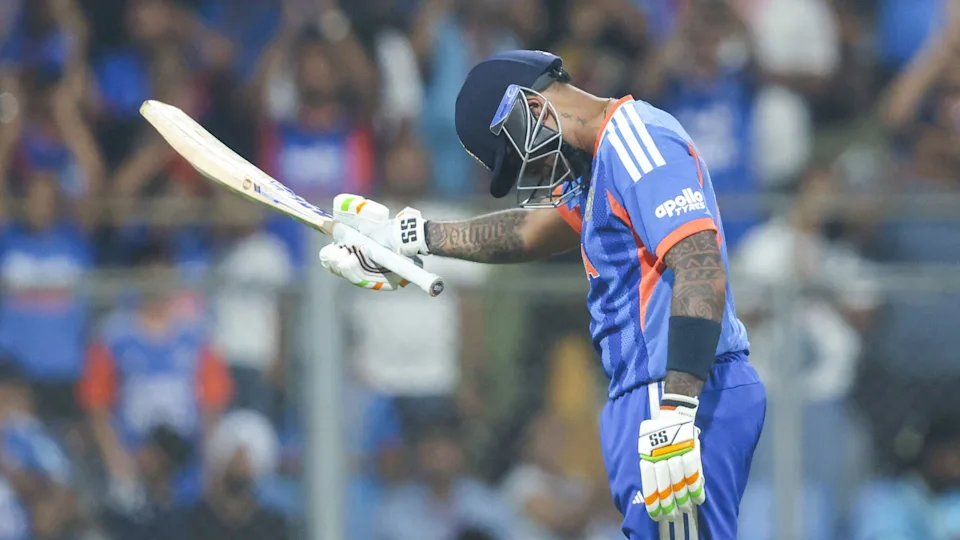
MELBOURNE, Feb. 7 — India secured a tense victory over the United States in the 2026 ICC Men’s T20 World Cup after a crucial innings by Suryakumar Yadav on February 7. The match, held in Australia, saw the United States post a competitive total, challenging the Indian side more than anticipated in this stage of the tournament. Yadav’s performance was pivotal in stabilising India’s chase following early wickets and pressure from the American bowling attack. India ultimately won by four wickets, narrowly avoiding a significant upset that would have marked a major milestone for American cricket.
The associate nation’s disciplined bowling and fielding, combined with Yadav’s 64-run rescue act, turned a group-stage fixture into a near upset that underlined the sport’s expanding competitive base.
Key facts
- Result: India beat the United States by four wickets to stay on course for the Super 12s.
- Match hero: Suryakumar Yadav’s measured 64 ensured the chase stayed on track.
- Turning point: India’s middle order absorbed U.S. pressure after early wickets.
- Context: ICC expansion lets associate teams like the United States test established powers.
United States pushes India to the brink
The United States, a relative newcomer on the global T20 stage, capitalised on disciplined bowling and sharp fielding to restrict India’s batting lineup. Their innings featured a collective effort with contributions from multiple players, allowing them to build a target that tested India’s lineup depth and adaptability. This spirited display demonstrated the expanding reach and improving standards of cricket in associate nations. The United States’ performance attracted attention within the cricketing community, reflecting the growth of the sport beyond traditional strongholds.
Yadav’s composure anchors the chase
Suryakumar Yadav’s innings was characterized by measured aggression and technical skill, underscoring his status as a crucial middle-order batsman for India. Faced with mounting pressure and a challenging pitch, he constructed a 64-run knock that included key partnerships which shifted momentum back in India’s favor. His ability to handle various bowling styles under pressure highlighted his maturity and proficiency in the T20 format. Yadav’s performance was the defining factor in India’s chase, ensuring the team maintained control and reached the target with limited wickets remaining.
Opening wobble exposes vulnerabilities
India’s opening batsmen struggled against the American pace and spin combination early in their innings, leaving the team’s middle order vulnerable. The early departures placed the onus on established players like Yadav to rebuild the innings. Throughout the contest, India’s strategy adapted to the conditions and opposition tactics, displaying their depth and experience in international cricket. The match also revealed areas requiring attention for future games, particularly India’s initial response to pressure scenarios posed by emerging teams like the United States.
ICC expansion delivers competitive drama
The International Cricket Council (ICC) has expanded the T20 World Cup format to allow more associate nations including the United States to compete on cricket’s biggest international stage. This approach is designed to foster global development and competitive diversity in the sport. The United States’ performance against India signaled their progress and ability to challenge established cricket powers despite limited experience at this level. The match was part of the tournament’s first round, with top-performing teams advancing to the Super 12 stage.
Group implications and tournament response
India’s narrow victory has implications for the tournament’s group dynamics, as it prevents a potentially destabilising upset and reinforces expectations of the Indian team’s progress to the later rounds. The team’s management acknowledged the challenges posed by the United States and emphasised the importance of every player contributing under tournament pressure. The performance showcased both resilience and the necessity of tactical flexibility in T20 cricket’s fast-paced environment.
No formal statements regarding rule interpretations or tournament regulations were issued by tournament officials post-match, and no disciplinary actions were reported. The result and individual performances have been recorded and will be reflected in the tournament’s official statistics and rankings. The next fixtures for India involve matches against other group opponents, where maintaining focus and adapting to diverse opponents remain priorities.